Vegan White Wine and Mushroom Risotto
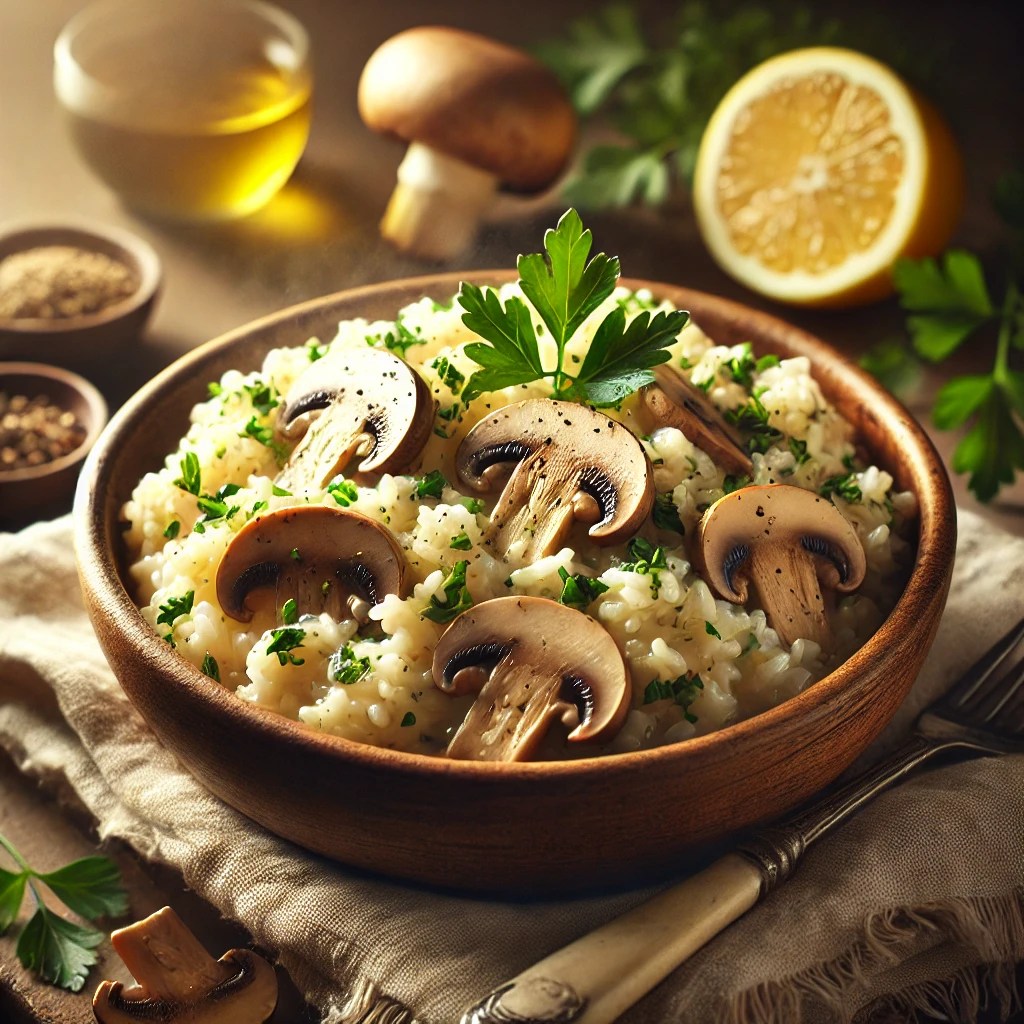
White Wine and Mushroom Risotto is a vegan dish that highlights the earthy flavors of mushrooms, the creaminess of Arborio rice, and the bright, aromatic quality of white wine. This dish is an elegant choice, whether you’re hosting guests, enjoying a cozy meal, or looking for a plant-based alternative that doesn’t compromise on flavor or texture. The step-by-step guide below will take you through each part of creating this risotto, along with tips on choosing ingredients, adjusting flavors, and serving suggestions.
Ingredients (Serves 4)
Each ingredient in this recipe plays an important role in creating the rich flavor and creamy texture that make risotto so satisfying.
- 1 1/2 cups Arborio rice: Arborio rice is a short-grain rice known for its high starch content, which gives risotto its signature creamy texture. Its grains absorb liquid slowly, making it perfect for dishes like risotto where a smooth, velvety consistency is desired.
- 2 tbsp olive oil: Olive oil is used to sauté the onions and garlic, providing a rich base flavor for the risotto. For the best results, use a high-quality extra virgin olive oil that complements the earthy mushrooms and aromatic wine.
- 1 medium onion (finely chopped): Onion adds sweetness and depth to the risotto. When cooked slowly, it softens and melds into the dish, providing a savory base that complements the rice and mushrooms.
- 3 cloves garlic (minced): Garlic adds a savory, aromatic flavor that enhances the mushrooms and white wine. The garlic should be minced finely to ensure it blends smoothly into the risotto.
- 1 cup white wine: White wine brings acidity and brightness to the risotto, balancing the richness of the olive oil and the earthiness of the mushrooms. Use a dry wine such as Sauvignon Blanc or Pinot Grigio for the best results, as these wines complement the flavors of the dish without overwhelming them.
- 4 cups vegetable broth: Vegetable broth forms the base of the risotto, adding depth and flavor. Opt for a high-quality or homemade broth, as it will significantly impact the final taste of the risotto. Keep the broth warm as you cook to maintain the risotto’s consistency.
- 1 lb mushrooms (sliced): Mushrooms are the star of this risotto. A mix of cremini, shiitake, or button mushrooms adds depth and texture, creating a hearty, umami-rich flavor. Sautéing the mushrooms beforehand brings out their natural flavors and enhances the dish.
- 1 tbsp fresh thyme (chopped): Thyme adds a hint of earthiness and freshness, complementing the mushrooms and bringing depth to the risotto. Fresh thyme works best, but dried thyme can be used if needed.
- Salt and black pepper (to taste): Salt and pepper enhance the flavors and bring balance to the dish. Add these seasonings gradually, tasting as you go to avoid over-seasoning.
- 1/4 cup nutritional yeast: Nutritional yeast provides a cheesy flavor, adding depth and umami without the use of dairy. It’s a common ingredient in vegan dishes, often used to replicate the savory flavor of Parmesan cheese.
- 1 tbsp vegan butter (optional): Vegan butter adds richness and a silky texture to the risotto, enhancing its creaminess. While optional, it’s a great finishing touch for a luxurious risotto.
- Chopped parsley (for garnish): Fresh parsley adds color and a bright, slightly peppery flavor that complements the rich flavors of the risotto.
- Lemon wedges (for garnish): A squeeze of fresh lemon juice adds a burst of acidity that balances the creaminess of the risotto, bringing out the flavors of the mushrooms and wine.
Step-by-Step Instructions
- Prepare the Mushroom SautéStart by preparing the mushrooms, as they will be added to the risotto later in the cooking process. Heat 1 tablespoon of olive oil in a large skillet over medium heat. Once the oil is hot, add the sliced mushrooms. Cook the mushrooms for about 5-7 minutes, or until they are golden brown and softened. Season them with a pinch of salt, pepper, and half of the fresh thyme.
- Choosing the Right Mushrooms: Using a combination of mushroom varieties (such as cremini, shiitake, and button mushrooms) adds complexity and texture to the risotto. Each type of mushroom brings its own unique flavor, creating a well-rounded dish.
- Why Sauté First? Cooking the mushrooms separately allows them to develop a deeper flavor and prevents them from releasing too much moisture into the risotto, which could dilute the dish.
- Start the Risotto BaseIn a large, heavy-bottomed pot or saucepan, heat the remaining tablespoon of olive oil over medium heat. Add the chopped onion and cook for about 5 minutes, or until it’s softened and translucent. Add the minced garlic and cook for an additional minute, stirring frequently to prevent burning.
- Creating the Base: The combination of olive oil, onion, and garlic forms a flavorful base for the risotto. Allowing the onion to soften slowly ensures it blends seamlessly into the rice, creating a smooth texture and rich taste.
- Add the RiceOnce the onions and garlic are softened, add the Arborio rice to the pot. Stir the rice constantly for 1-2 minutes to toast it slightly. Toasting the rice helps the grains absorb the liquid more evenly and adds a subtle, nutty flavor to the dish.
- Why Toast the Rice? Toasting the Arborio rice creates a protective layer around each grain, allowing it to slowly absorb liquid. This process is key to achieving the creamy texture characteristic of risotto.
- Deglaze with White WinePour the white wine into the pot, stirring continuously. The wine will sizzle as it hits the pot, releasing steam and deglazing any bits stuck to the bottom. Continue to stir until the wine is mostly absorbed by the rice, about 2-3 minutes.
- Adding Flavor with White Wine: White wine adds acidity and complexity to the risotto, balancing the rich flavors of the mushrooms and olive oil. The alcohol will cook off, leaving behind a subtle, aromatic flavor that enhances the dish.
- Add Broth GraduallyBegin adding the warm vegetable broth to the risotto one ladleful at a time. Stir the rice constantly, allowing each ladleful of broth to be absorbed before adding the next. Continue this process for about 18-20 minutes, until the rice is creamy and tender but still slightly al dente.
- Why Add Broth Gradually? Adding the broth slowly allows the rice to release its starch gradually, creating a creamy texture. Stirring constantly helps the starches combine with the broth, giving risotto its signature velvety consistency.
- Incorporate the Mushrooms and SeasonOnce the rice has reached the desired texture, stir in the sautéed mushrooms, remaining thyme, nutritional yeast, and vegan butter if using. The nutritional yeast adds a cheesy, savory flavor, while the vegan butter adds richness.
- Adding Nutritional Yeast for Umami: Nutritional yeast is a common ingredient in vegan cooking that provides a nutty, cheesy flavor. It’s an excellent substitute for Parmesan cheese and enhances the savory quality of the risotto.
- Adjusting Seasonings: Taste the risotto and adjust the salt and pepper to your preference. The right amount of seasoning will bring out the best in the mushrooms, wine, and creamy rice.
- Serve and GarnishSpoon the risotto into serving bowls, garnishing each bowl with chopped parsley and a squeeze of fresh lemon juice. The lemon juice adds brightness and acidity, cutting through the richness of the dish.
- Serving Suggestion: Pair the risotto with a glass of the same white wine used in the recipe for a harmonious dining experience. The flavors of the wine in the risotto will complement the wine in your glass, enhancing the meal.
Tips for Perfect Vegan White Wine and Mushroom Risotto
- Choosing the Right Rice: Arborio rice is essential for risotto because of its high starch content, which creates a creamy texture. If Arborio rice isn’t available, Carnaroli or Vialone Nano are good alternatives.
- Selecting White Wine: Opt for a dry, crisp white wine like Sauvignon Blanc or Pinot Grigio. These wines add acidity and brightness without being overly sweet, which balances the richness of the risotto.
- Maintaining the Right Texture: Constant stirring and gradually adding the broth are essential techniques for achieving a creamy risotto. If the risotto becomes too thick, add a splash of broth to reach the desired consistency.
- Finishing with Lemon: A squeeze of lemon at the end adds a burst of freshness that elevates the dish. The acidity balances the rich flavors and enhances the mushrooms and thyme.
Flavor Variations and Serving Ideas
- Truffle-Infused Risotto: For a luxurious touch, drizzle a small amount of truffle oil over the finished risotto. The earthy flavor of truffle oil pairs wonderfully with mushrooms and adds depth.
- Spinach and Mushroom Risotto: Add a handful of fresh spinach to the risotto toward the end of cooking. The spinach will wilt and blend into the risotto, adding color and nutrients.
- Leek and Mushroom Risotto: Replace the onion with finely chopped leeks for a subtle, sweet flavor. Leeks add a creamy texture and work well with the mushrooms and white wine.
This Vegan White Wine and Mushroom Risotto is a decadent, satisfying meal that highlights the natural creaminess of Arborio rice, the depth of sautéed mushrooms, and the brightness of white wine. Perfect for special occasions or cozy dinners, this risotto is an elegant addition to any meal. Enjoy each creamy, flavorful bite!
 Cooking With Beer, Whiskey and Spirits
Leave a comment